



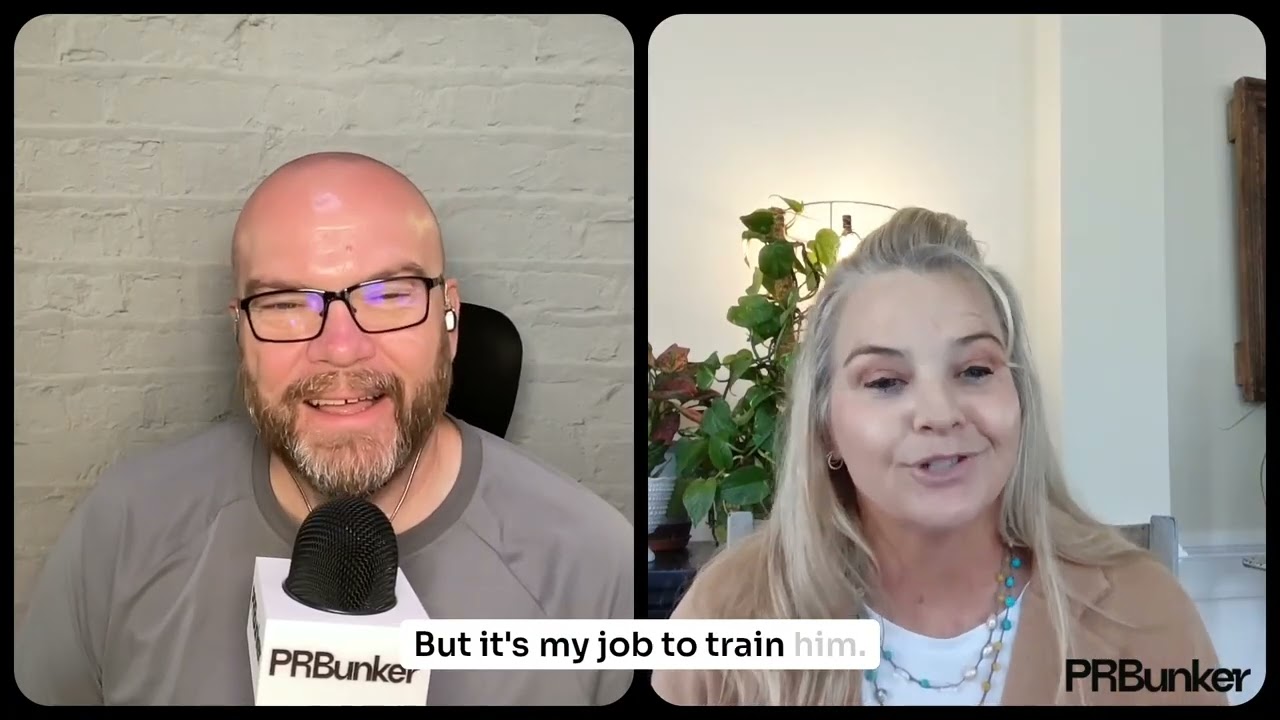
Kirsten Milhorn is the youngest of seven, with six older brothers, and she'll tell you that made her a fighter. She teaches first grade in Fairfax County, Virginia. On May 20 of this year, nine years to the day after her niece Sophie went missing, she stood up at a PTA meeting and launched Sophie's Light Foundation.
Sophie was fifteen and, like a lot of teenagers, was looking for affirmation online. Kirsten's response is not to take away the devices. It's to teach kids, starting at five and six years old, that they're allowed to say no, that their last name is not something to share, and that a stranger offering money to keep playing a game is a red flag. In this episode of The PR Bunker Podcast, she explains how a teacher builds that curriculum and what's coming this fall.
A few takeaways from the conversation:
Kirsten's first graders line up quietly the second a fire alarm sounds. Nobody has ever drilled them on what to do when someone on Roblox asks their name. Her point is that we put age limits on driving and cigarettes but give kids an all-access pass online with no training at all. Online safety, in her view, belongs in the school day the same way math does.
The pilot is ten simple lessons, one a week, about half an hour each, with material broken into K to 2, 3 to 5, 6 to 8 and high school. Kindergartners get thumbs up or thumbs down games about cameras and names. Middle schoolers learn what manipulation looks like, including the "can you keep a secret" move. High schoolers get the hard topics, from sextortion and trafficking to a digital footprint that never goes away. The data comes from the National Center for Missing and Exploited Children, and every lesson goes home as a conversation starter for parents.
Sophie's Light is partnering with Fairfax County school board members on an online safety night this fall, with the FBI, county police, NCMEC and the monitoring app Bark in the room. Parents get the local numbers. Kids get a live lesson. Kirsten wants it nonpartisan and laid back, because kids' safety should never be a political fight.
Kirsten didn't plan to run a nonprofit. It picked up speed faster than she expected, and she's still in the classroom. Visit sophieslight.org to read Sophie's story, see a sample lesson or donate.
Listen to the full episode above.
Reading is the hello. SBGA is where we get to yes.
What is Sophie's Light Foundation?
A nonprofit founded in 2026 by Fairfax County teacher Kirsten Milhorn in honor of her niece Sophie, who went missing at fifteen. It develops age appropriate online safety curriculum for K through 12 students and their families, built on data from the National Center for Missing and Exploited Children.
At what age should kids learn online safety?
Sophie's Light starts in kindergarten with basics like not sharing your full name or turning on a camera for strangers, then builds toward recognizing manipulation in middle school and understanding digital footprint and exploitation risks in high school.
How can parents start the online safety conversation at home?
Ask what games your child plays, whether they talk to people on them, and whether they know those people in real life. Simple, curious questions open the door better than restrictions alone.

Have a project, campaign, or comms challenge in mind?
Want to be a guest on the PR Bunker podcast?
Reach out and let’s talk.


