



The law firms have written thorough legal analyses of Massachusetts' consolidated siting reform. This is not that. This is the plain-English version for development teams who need to know what actually happens between "we want to build here" and "we have a decision" - and where projects get stuck along the way.
I wrote about what the new framework requires and why. This piece is the sequence.
The smart work happens before pre-filing formally begins. Stakeholder mapping: who are the councilors, the fire chief, the neighborhood groups, the last project's opponents? What's the town's history with development? What died here before and why? This phase costs the least and determines the most, and almost everyone skips it.
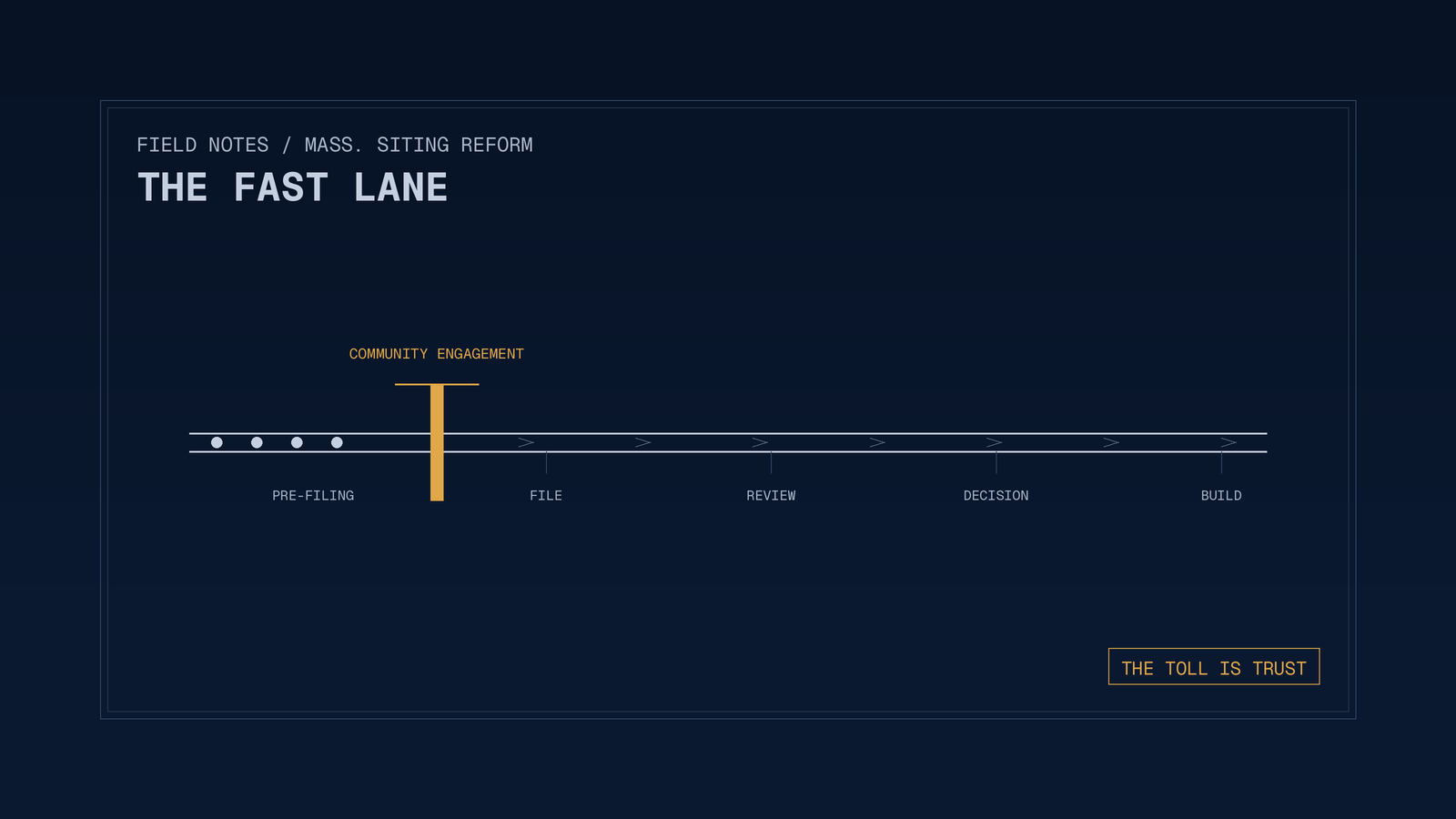
This is the new mandatory piece. For large clean energy facilities - including battery storage at 100 megawatt hours and up - you must complete documented community consultation before the Energy Facilities Siting Board will accept your application. In practice that means accessible public sessions, plain-language project materials, engagement with the host community and, where applicable, environmental justice populations, and a record showing you gathered and considered resident input.
Where projects get stuck: treating this phase as a box to check. The EFSB reads the record, but the community reads your behavior. A pre-filing process that generates three hostile meetings and a petition is technically complete and practically fatal - you'll spend the entire review period fighting the narrative it created.
Once your application is accepted, the consolidated framework puts the EFSB on a decision clock - the reform was designed to end the era of open-ended, multi-year reviews. A single consolidated permit replaces the old patchwork of separate state and local approvals for qualifying facilities. Smaller projects run through consolidated municipal permitting instead, which every Massachusetts city and town must stand up by October 1, 2026.
Where projects get stuck: assuming the clock protects you. It protects you from bureaucratic delay. It does not protect you from an intervenor-rich, opposition-heavy record - which is built or prevented in phase two.
The permit is not the finish line. Construction brings noise complaints, truck traffic, and a community watching to see if you keep the commitments you made in those early meetings. Developers who maintain the communication rhythm they built in pre-filing - regular updates, a real point of contact, fast responses when something goes wrong - bank goodwill they will need for the next project. Developers who go dark after the vote confirm every suspicion the opposition raised.
The state built a faster lane and put a toll booth at the front of it: the toll is genuine community engagement, and developers who try to pay it with a brochure will find the fast lane very slow.
Don Martelli has led community relations and public affairs work behind more than 165 million square feet of permitted Massachusetts development, including Suffolk Downs, MarketStreet Lynnfield, and active battery storage engagements. He is the founder of PR Bunker and president of the Revere Chamber of Commerce. Reach him at don@prbunker.com or schedule a call.
For large clean energy facilities, including BESS projects of 100 megawatt hours or more, developers must complete documented pre-filing consultation and community engagement before the Energy Facilities Siting Board will accept the application - accessible public sessions, plain-language materials, and a record showing resident input was gathered and considered.
The consolidated framework puts the EFSB on a defined decision clock and replaces the old patchwork of separate approvals with a single consolidated permit - the reform exists specifically to end open-ended multi-year reviews. The practical variable is the record: projects that enter review with organized opposition and heavy intervention spend the clock fighting instead of building.
In the gap between compliance and trust. A pre-filing engagement process can satisfy the regulation while leaving the community feeling blindsided - and that community shows up for the entire review. Doing the engagement well, not just doing it, is the actual schedule protection, and it's the core of our community relations practice.

Have a project, campaign, or comms challenge in mind?
Want to be a guest on the PR Bunker podcast?
Reach out and let’s talk.


