



I've spent 25 years in the rooms where development projects live or die - planning board meetings, town meeting floors, senior center info sessions where the fire chief gets asked the same question forty times. Battery storage is the newest thing in those rooms, but the questions are remarkably consistent from town to town.
If you're developing a BESS project in Massachusetts, especially now that the state requires community engagement before you file, you should know these questions cold - and more importantly, know how to answer them in a way that calms a room instead of inflaming it.
This is the first question, every time, and it deserves a straight answer. Residents have seen the headlines from Moss Landing and elsewhere. Don't dismiss the concern and don't bury it in jargon.
What works: the fire chief, not the developer, explaining the response plan in his own words. Thermal runaway data doesn't calm a room. A firefighter saying "here's what we'd do, here's the training we've received, here's the equipment the developer is funding" does. If your fire department hasn't been briefed before the public meeting, you've already lost the meeting.
Answer honestly: the research on BESS and property values is limited but hasn't shown the effects people fear, and the facility is quiet, low-profile, and generates tax revenue that funds the services that do drive property values - schools, fire, roads. Then get specific about your project: setbacks, screening, landscaping, what a neighbor will actually see from their porch. Vague reassurance signals evasion. Renderings from the abutter's point of view signal respect.
Inverters and HVAC hum. Say so. Then give the number at the property line, compare it to something real - a refrigerator, a quiet conversation - and explain the sound study that will verify it. Committing to post-construction sound testing costs you little and buys enormous credibility.
Decommissioning is the sleeper question - it signals whether you're a long-term neighbor or a fly-by-night operator. The answer residents want: a funded decommissioning plan, secured by bond, reviewed by the town, that doesn't depend on your company still existing in 20 years. If your project has one, lead with it. If it doesn't, get one before your first public meeting.
The honest answer involves interconnection points and land availability, but the answer that works pairs honesty with benefit: here's what the town gets - tax revenue, grid reliability, host community agreement terms. Communities can accept "this location works for technical reasons" when it comes with "and here's what's in it for you," delivered before they had to ask.
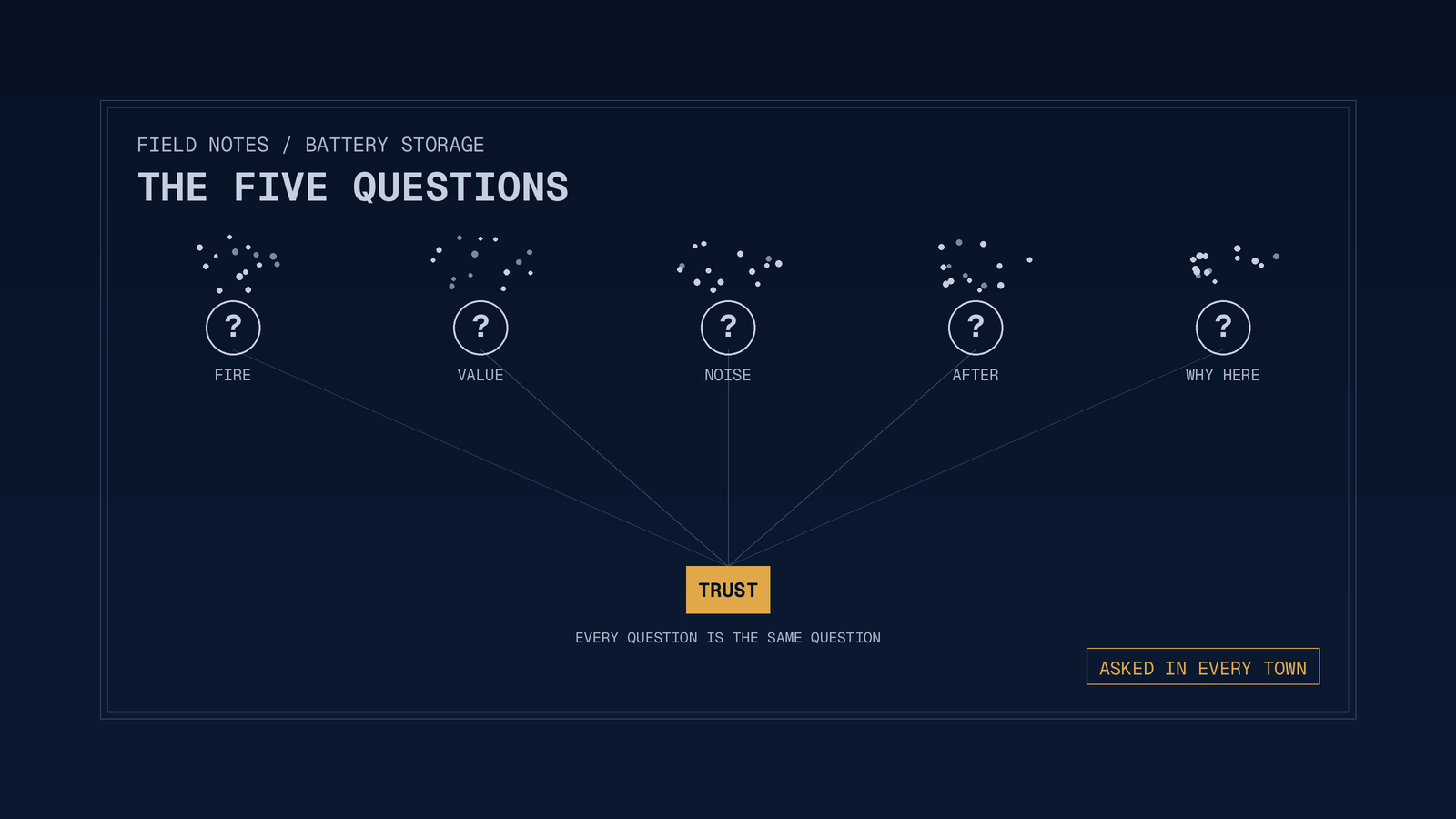
Every one of these questions is really the same question: can we trust you? Answers that are specific, verifiable, and delivered early build trust. Answers that are vague, technical, or delivered only after opposition organizes destroy it. That's the whole game, and it's why community relations is a discipline, not a checkbox.
Don Martelli has led community relations and public affairs work behind more than 165 million square feet of permitted development in Massachusetts, including Suffolk Downs, MarketStreet Lynnfield, and active battery storage engagements. He is the founder of PR Bunker and president of the Revere Chamber of Commerce. Facing a room like this soon? Reach him at don@prbunker.com or schedule a call.
Modern BESS facilities are engineered with fire detection, suppression, thermal management, and spacing standards, and Massachusetts now requires detailed emergency response planning with local fire departments. The legitimate question isn't whether risk exists - it's whether the developer has funded training, equipment, and a response plan your fire chief has personally signed off on.
Available research hasn't shown the effects residents fear. BESS facilities are quiet and low-profile, and they generate municipal tax revenue without adding traffic or school enrollment. What matters locally is project-specific: setbacks, visual screening, sound levels at the property line, and a funded decommissioning plan.
Brief the fire chief, prepare abutter-view renderings, secure a bonded decommissioning plan, and know the room's stakeholders before entering it. Under Massachusetts' 2026 siting framework, pre-filing engagement is mandatory - but doing it well, not just doing it, is what gets projects built.

Have a project, campaign, or comms challenge in mind?
Want to be a guest on the PR Bunker podcast?
Reach out and let’s talk.


